What Is a Class 2 Licence? Category C Explained
A Class 2 licence is Category C. It lets you drive a rigid lorry over 3.5 tonnes. Here is what that means in practice.
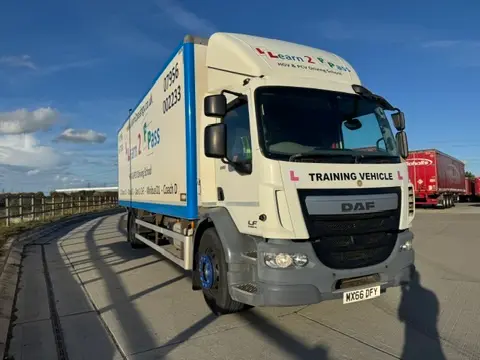
A Class 2 licence lets you drive a rigid lorry over 3.5 tonnes, with a trailer up to 750kg. Its official name is Category C. Class 2 is the everyday term, Category C is what appears on your licence, and they mean exactly the same thing.
It is the licence most people start with, and the one most UK employers ask for when they advertise for an HGV driver.
What can you actually drive on Class 2?
Any rigid goods vehicle over 3.5 tonnes. Rigid means the cab and the load area are one fixed unit — it does not bend in the middle.
In practice that is supermarket delivery lorries, tippers, skip lorries, refuse trucks, curtain-siders, box lorries, concrete mixers and most builders' merchant vehicles. If you have watched a lorry reverse into a shop loading bay, that was almost certainly a Class 2.
You can also tow a small trailer up to 750kg.
What can't you drive?
Articulated lorries. Anything where a tractor unit pulls a separate trailer connected by a fifth wheel — the ones that bend in the middle — needs Class 1, officially Category C+E.
You also cannot pull a trailer over 750kg behind your rigid without C+E.
Class 2 or Category C — what is the difference?
None. They are two names for the same licence.
"Class 2" comes from the old pre-1997 licensing system and stuck because it is easier to say. "Category C" is the current official term. Job adverts use both, sometimes in the same advert. If you see either, they want the same thing.
How do you get a Class 2 licence?
Five steps, in this order.
1. Be 18 or over and hold a full UK car licence.
2. Pass a D4 medical. A doctor checks eyesight, blood pressure, and anything that could affect your fitness to drive professionally. It is a form, not an exam.
3. Apply for provisional HGV entitlement using the D2 form, sent to the DVLA with your completed D4.
4. Pass the theory test — multiple choice and hazard perception, plus Driver CPC Part 2 case studies if you are driving professionally.
5. Train and pass the practical test — off-road manoeuvres and an on-road drive, plus Driver CPC Part 4 if you need the qualification card.
The paperwork sounds worse than it is. Most people are put off by steps 2 and 3, which are the two easiest. We handle both for you.
How much does a Class 2 licence cost?
Our training price is £1,195 + VAT, or £1,644 all in including the DVSA tests — the Off-Road Exercises Test at £40, the On-Road Driving Test at £115 and Driver CPC Part 4 at £55. DVSA fees are not VAT-rated, so they are added after VAT rather than before it.
On top of that sit your D4 medical and your theory test fee. We publish these figures because you should be able to compare them. Anyone quoting a headline price without telling you what is excluded is not quoting the same thing. Full breakdown on our HGV training cost page.
How long does it take?
Five days of training. Realistically, six to ten weeks from first enquiry to licence in hand, and most of that is waiting for DVSA test availability rather than training.
Do you need Class 2 before Class 1?
Normally yes — Category C+E requires you to already hold Category C.
But you do not have to stop in between. A Car to Class 1 course runs both stages back to back as one programme, which is faster and cheaper than booking them separately if you already know you want to drive artics.
What jobs can you get with Class 2?
Supermarket and grocery distribution, parcel and courier networks, construction and tipper work, waste and recycling, builders' merchants, brewery and drinks delivery, and plenty of local multi-drop work.
Class 2 drivers in Kent typically earn around £42,000 a year. Rigid work tends to mean more local routes and more nights at home than artic work, which is why a lot of drivers stay on Class 2 by choice rather than treating it as a stepping stone.
Frequently asked questions
Is Class 2 the same as HGV?
HGV means heavy goods vehicle — it is the category of vehicle, not a licence. Class 2 and Class 1 are both HGV licences. If an advert says "HGV driver" without specifying, it usually means Class 2.
Can I drive a 7.5 tonne lorry on Class 2?
Yes. Class 2 covers everything over 3.5 tonnes, so a 7.5 tonne vehicle is included. If 7.5 tonnes is all you need, C1 is a cheaper and quicker licence.
How old do you have to be?
18, provided you hold or are working towards Driver CPC. Without CPC the minimum is 21.
Does a Class 2 licence expire?
The entitlement must be renewed at 45 and every five years after, with a medical each time. Separately, your Driver CPC needs 35 hours of periodic training every five years.
Is Class 2 hard to pass?
It is a different skill from car driving rather than a harder one. The reversing exercise catches most people out, which is why we train on the routes used at the Gillingham DVSA test centre — nothing on test day is unfamiliar.
Where to start
If Class 2 is the licence you want, our Category C training course covers five days on full-size vehicles at our Sittingbourne centre with DVSA-approved instructors, and we handle the medical, the D2 paperwork and the test bookings.
Call 01795 667 008 and we will tell you which route fits, including when it is cheaper not to take Class 2 at all.