What Is a C1+E Licence? Towing With a 7.5 Tonne
C1+E lets a 7.5 tonne vehicle tow a trailer over 750kg. Who needs it, and who already has it.
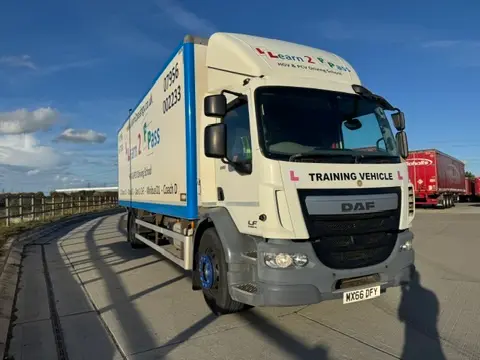
C1+E lets you drive a vehicle between 3,500kg and 7,500kg while towing a trailer over 750kg, up to a combined 12,000kg. Written as C1E, C1+E or Cat C1+E — all the same entitlement.
It is the licence horsebox owners, event crews and utilities contractors most often discover they need the hard way, at the side of a road.
What the +E actually adds
C1 on its own covers a 7.5 tonne vehicle with a trailer of up to 750kg behind it. That is a small box trailer and not much else.
The E is trailer entitlement. It lifts that 750kg cap and lets you tow a proper trailer — a horse trailer, a plant trailer, a generator — with the vehicle and trailer together weighing no more than 12,000kg.
Check your photocard — you may already have it
Licences issued before 1 January 1997 typically carry C1+E as well as C1.
Which means a large number of people towing horse trailers are perfectly legal and have no idea, and an equally large number assume they are covered when their licence was issued after 1997 and they are not.
The categories are printed on the reverse of the photocard with valid-from and valid-to dates. Two minutes now is cheaper than a roadside conversation later.
Who actually needs C1+E
Equestrian. A 7.5 tonne horsebox towing a trailer, or anyone running above the 750kg cap. Loaded horse trailers are comfortably over it.
Events, catering and motorsport. A box vehicle plus a generator, awning or race trailer.
Utilities, arboriculture and groundworks. A 7.5 tonne tipper towing a chipper, roller or plant trailer.
Emergency and support services. Welfare and command units that tow.
C1+E or C+E?
The difference is what you are towing with. C1+E tops out at 12,000kg for the whole combination. C+E — Class 1 — has no equivalent ceiling and covers a 44-tonne articulated lorry.
If your towing is genuinely inside 12 tonnes, C1+E is quicker and cheaper. If there is any commercial haulage in your future, go for C+E instead: it pays considerably more and covers everything C1+E does. Our Class 1 vs Class 2 comparison sets out that trade-off.
Note what changed for cars
The separate car-and-trailer test was scrapped in Great Britain in December 2021, and full car licence holders can now tow trailers up to 3,500kg without an additional test.
That change applies to cars only. It did nothing for C1+E or C+E, which remain proper DVSA tests — and a lot of advice online has not caught up.
How the test works
D4 medical, D2 provisional application, theory if you do not already hold a valid pass, then training and the practical test.
The practical adds an uncoupling and recoupling exercise on top of the reversing manoeuvre and the road drive. You detach the trailer, secure it, then reconnect it correctly. It is a procedure to learn rather than a talent to acquire, and it is marked carefully because getting it wrong on the road is dangerous.
For genuinely non-commercial use, such as your own horsebox, no Driver CPC is needed. For paid work it is.
Frequently asked questions
What does C1E mean on a driving licence?
C1 is the 3,500kg to 7,500kg vehicle entitlement; E is the entitlement to tow a trailer over 750kg behind it, up to 12,000kg combined.
Do I already have C1+E?
If your car test was passed before 1 January 1997, usually yes. Check the category list on the back of your photocard.
Do I need C1+E to tow a horse trailer?
If the trailer is over 750kg and the towing vehicle is over 3,500kg, yes. Loaded horse trailers are over 750kg.
What is the weight limit for C1+E?
12,000kg for the vehicle and trailer combined.
Is C1+E the same as C+E?
No. C+E is the Class 1 articulated licence with no 12-tonne ceiling.
What to do next
Start by reading your photocard — a good number of people find they already hold what they were about to pay for.
Call 01795 667 008 and we will check it with you, then tell you whether C1+E or a full Class 1 is the better route for what you are towing. Prices for every category are on our pricing page.