Class 1 vs Class 2: Which HGV Licence Do You Need?
Class 1 or Class 2? Compared on cost, jobs, pay and how long each takes, so you can pick the right one first time.

The short version: Class 2 lets you drive a rigid lorry over 3.5 tonnes. Class 1 lets you drive an articulated lorry at up to 44 tonnes, and it includes everything Class 2 covers.
You do not have to pass Class 2 before Class 1. Since November 2021 you can go straight from a car licence to Class 1, and for a lot of people that single fact decides the route, so we will come back to it.
Class 1 vs Class 2 at a glance
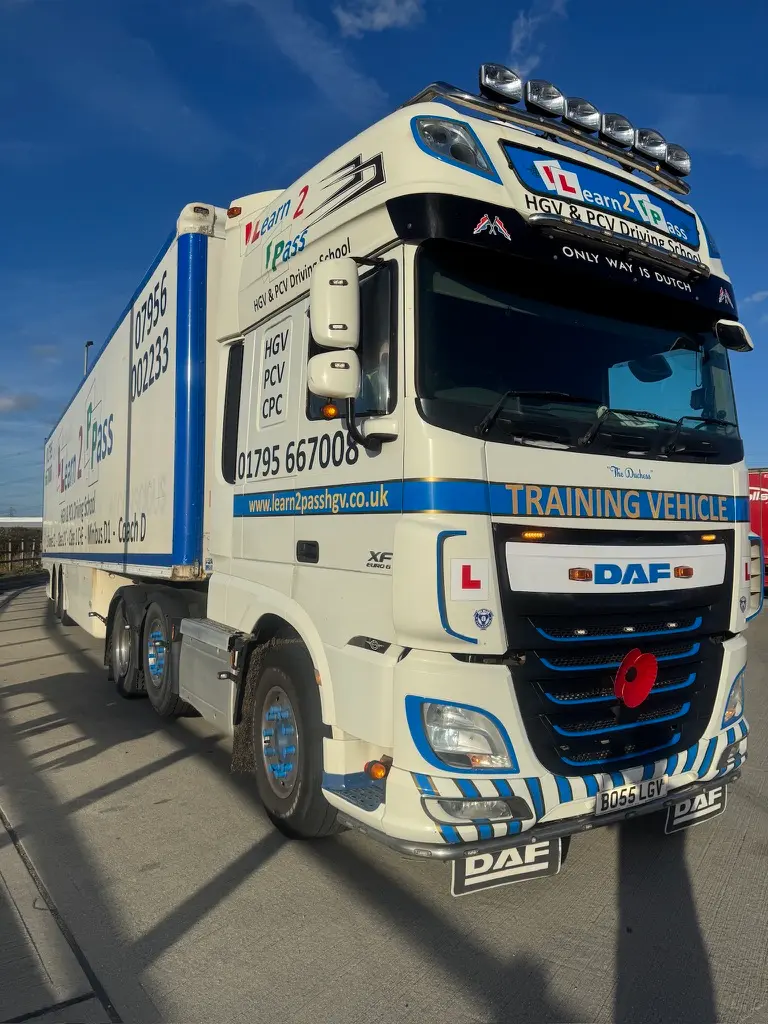
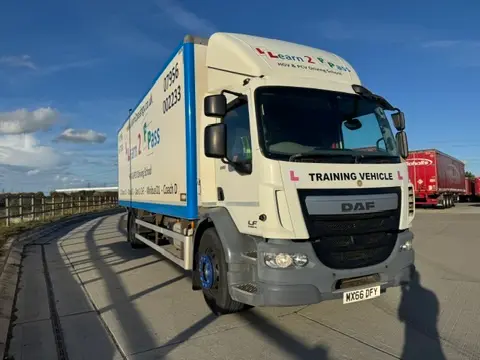
What you drive. Class 2 is a rigid lorry — cab and body in one fixed unit, no bend in the middle. Class 1 is an artic — tractor unit pulling a separate trailer on a fifth wheel.
Official name. Class 2 is Category C. Class 1 is Category C+E.
What it costs with us. Class 2 is £1,295 + VAT training, £1,764 all in. The Class 1 upgrade is £1,395 + VAT training, £1,829 all in. Car to Class 1, straight from a car licence, is £2,826 all in.
Training time. Five days each. Six to ten weeks end to end for Class 2, eight to twelve weeks for the full car-to-artic route.
Typical pay in Kent. Around £42,000 for Class 2. Over £40,000 for Class 1, rising to £55,000–£60,000 with experience on artics.
The lifestyle. Class 2 is mostly local and regional work, home most nights. Class 1 is more distance work, more nights away, higher ceiling.
Can you go straight to Class 1?
Yes. Since November 2021 you no longer need to hold Category C before taking the Category C+E test. When you apply for provisional entitlement, ticking C on the D2 gives you provisional C+E too, and GOV.UK says you do not need to pass a test for a lower category first.
That is what our Car to Class 1 course is for: eight days of one-to-one training in an artic, from a car licence to Class 1, with no stop at Class 2 in between. A Class 1 licence covers everything Class 2 does, so you are not closing any doors.
So the honest answer is: you can skip Class 2, and if you already know you want artic work, it usually makes sense to.
Which one should you actually take?
Take Class 2 if you want a paid driving job as quickly and cheaply as possible, you want to be home most evenings, or you are drawn to construction, waste, supermarket delivery or multi-drop work. Plenty of drivers stay on Class 2 for their whole career by choice, not because they got stuck.
Take Class 1 if you already know you want artic work, you are chasing the highest earnings, or you want the widest choice of employers. Trunking, supermarket distribution and long-distance haulage all recruit for C+E.
Take Car to Class 1 if you have decided on artics and you are starting from a car licence. Going straight to Class 1 costs less than doing Class 2 and upgrading later.
There is no wrong first step here. Class 2 is never wasted, because you can upgrade to Class 1 whenever you are ready.
Is the extra money worth it?
The Class 1 upgrade costs around £1,830 all in and typically adds several thousand a year to your earning potential, so on paper it pays for itself quickly.
The part that does not show up on a spreadsheet is time. Artic work generally means longer runs and more nights away from home. Some drivers happily trade that for the money. Others take one look at tramping and stay on rigid work permanently. Neither is wrong, and we would rather you knew that before you paid us.
What about the other licence categories?
Class 1 and Class 2 are not the only options, and for some people they are the wrong ones.
C1 covers 3.5 to 7.5 tonnes — ambulances, couriers, horseboxes. Cheaper and quicker than Class 2, and if you passed your car test before 1997 you may already have it.
PCV Category D is buses and coaches. Completely separate from HGV, and you can go straight to it from a car licence.
D1 is minibuses up to 16 seats — schools, care work, community transport.
Read more on each licence
Full explainers on every category, covering what each one lets you drive, what it costs and how to get it:
What is a Class 2 licence? Category C explained
What is a Class 1 licence? Category C+E explained
What is a C1 licence? The 7.5 tonne licence explained
What is a PCV licence? Category D explained
What is a D1 licence? The minibus licence explained
Frequently asked questions
Is Class 1 or Class 2 higher?
Class 1 is the higher licence. It contains Class 2, so a Class 1 driver can legally drive any rigid lorry as well.
Can I upgrade from Class 2 to Class 1 later?
Yes, and many drivers do. The upgrade is five days of training and one practical test. Your medical and provisional entitlement carry over, though a theory pass expires after two years.
Which is easier to pass?
Class 2. The Class 1 reversing exercise is harder because the trailer pivots, and there is coupling and uncoupling to learn on top. Drivers who already hold Class 2 usually find the on-road part straightforward.
Do I need Driver CPC for both?
Yes, for professional driving on either. It is one qualification covering all categories, not one per licence. Driver CPC has not been scrapped.
Where will I train and test?
Training is at our Sittingbourne centre on full-size vehicles. You test at the Gillingham DVSA test centre, on routes you have already driven during training.
Where to start
If you want Class 2, our Category C course is the fastest route to a paid driving job.
If you already hold Class 2, the Category C+E upgrade is five days.
If you are starting from a car licence and you want artics, Car to Class 1 takes you straight there in one programme.
Still not sure? Call 01795 667 008. We will ask what hours you want to work and what you want to earn, and tell you which licence fits — including when the cheaper one is the right answer.