"Heavy Rigid" in the UK: What You Actually Need
Heavy rigid is an Australian licence class. In the UK the equivalent is Category C. Here is what that means for you.
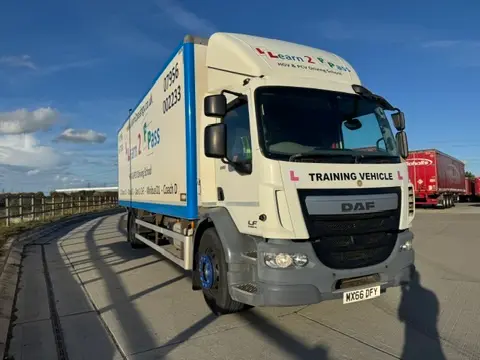
"Heavy rigid" is not a UK licence class. It is Australian. If you are searching for heavy rigid training or a heavy rigid course in the UK, the licence you actually want is Category C — what everyone here calls Class 2.
Two very different people search this term, and the answer is different for each.
If you are in the UK and picked the term up online
A lot of driving content on the internet is Australian, and "HR" or "heavy rigid" turns up constantly in it. In Australia, Heavy Rigid is a licence class covering a rigid truck with three or more axles above a set weight.
The UK does not use that system. Our equivalent is Category C, known universally as Class 2: any rigid goods vehicle over 3,500kg, plus a trailer up to 750kg. Same vehicles, same work, different name.
So if you want to drive an 18-tonne curtainsider, a tipper, a skip lorry, a refuse truck or a supermarket rigid in this country, Class 2 is the course to book. Ours is £1,195 + VAT, or £1,644 all in with the DVSA tests.
If you already hold an Australian HR licence
This is the more useful case, and the answer is less welcome.
Vocational entitlements from outside the EU and EEA generally do not transfer to a UK licence. You can usually drive on a foreign licence for a limited period after arriving, but that does not extend to driving lorries commercially here — and it does not convert into UK Category C.
In practice that means starting the UK route: a D4 medical, a D2 provisional application, the theory test, then training and the practical. The good news is that you will find the training itself considerably easier than someone who has never driven anything larger than a car. Experienced drivers routinely need less time in the vehicle, and the test is a formality once the UK-specific habits are in place.
Check the current exchange position on GOV.UK before assuming anything, because the rules differ by country and do change.
Rigid versus articulated — the distinction that matters here
Whatever you call it, the split that decides your licence is whether the vehicle bends in the middle.
Rigid means the cab and load area are one fixed unit. That is Category C, our Class 2 course.
Articulated means a tractor unit pulling a separate trailer on a fifth wheel. That is Category C+E, Class 1, and it pays more.
Australian licensing splits these as HR, HC and MC. UK licensing splits them as C and C+E. The vehicles are recognisably the same on both sides of the world.
What rigid work looks like in the UK
Supermarket and grocery distribution, parcel and courier networks, construction and tipper work, waste and recycling, builders' merchants, brewery and drinks delivery, and a great deal of local multi-drop.
Class 2 drivers in Kent typically earn around £42,000, and rigid work tends to mean more local routes and more nights at home than articulated work. Plenty of drivers stay on Class 2 by choice rather than treating it as a stepping stone. Our salary guide goes into the numbers.
Frequently asked questions
Is heavy rigid the same as Class 2?
In practice yes. Heavy Rigid is the Australian class for a large rigid truck; Category C, or Class 2, is the UK equivalent. Different licensing systems, same vehicles.
Can I drive in the UK on an Australian HR licence?
Not commercially. Vocational entitlements from outside the EU and EEA generally do not transfer, so you take the UK tests. Check GOV.UK for the current position for your country.
What is a heavy rigid course in the UK?
It is a Category C course — five days of training on a full-size rigid lorry, then the DVSA practical test.
How much does it cost?
Our Class 2 training is £1,195 + VAT, or £1,644 all in including the DVSA tests. Add roughly £110 for the D4 medical and theory fees. Full breakdown on our training cost page.
Do I need Class 2 before Class 1?
Normally yes, because Category C+E requires Category C first. A Car to Class 1 course runs both back to back as one programme.
What to do next
If you have found this page searching for heavy rigid training, book a Class 2 course — that is the licence you want.
If you hold an overseas lorry licence and are not sure where you stand, call 01795 667 008. We will tell you honestly what transfers, what does not, and how much of the course you genuinely need.