Ambulance Driver Training: The C1 Licence Trusts Ask For
Almost every ambulance role asks for C1 before you can apply. What it costs, and why blue light training is separate.
Almost every front-line ambulance role in the UK asks for C1 on your licence before you can apply. It is in the essential criteria, not the desirable ones, and the trust will not usually get it for you first.
That single requirement is what stops most otherwise strong applications. It is also the cheapest and quickest vocational licence there is.
Why ambulance work needs C1
A modern front-line ambulance weighs more than 3,500kg once it is fully equipped and crewed. That takes it above what an ordinary car licence covers and into Category C1 — vehicles between 3,500kg and 7,500kg.
So it is not a preference or a nice-to-have. It is a legal requirement attached to the vehicle, which is why it appears in job adverts as a condition of applying.
C1 is the licence. Blue light training is not.
This is the part people conflate. C1 lets you drive the vehicle. It does not let you drive it on blue lights.
Emergency response driving is a separate qualification, delivered by the employer once you are in post. It covers exemptions, speed, and a standard of driving well beyond an ordinary test.
That split is good news if you are applying: the part you need before you apply is the shorter, cheaper part.
Check your licence before you spend anything
If you passed your car test before 1 January 1997, turn your photocard over and look at the category list. C1 is very likely already there.
If it is, you can apply today without training at all. If your licence was issued after that date, C1 is a test — and it is a short one.
What the route looks like
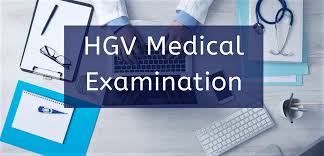
1. The D4 medical. Twenty minutes with a doctor. £50 with us against £70 to £80 elsewhere.
2. The D2 provisional application. Free from DVLA. The usual delay is an envelope missing the D4 or the photocard — see our D2 guide.
3. Theory. Multiple choice and hazard perception, plus CPC Module 2 if the role is paid, which for an ambulance service role it will be.
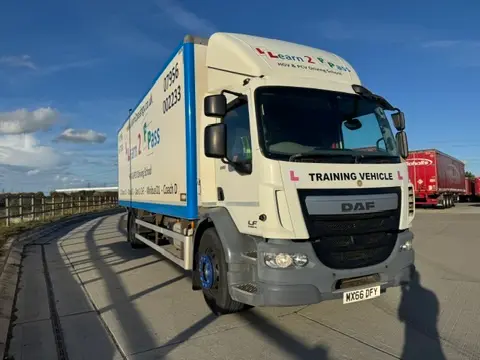
4. Training and test. Three days on a real 7.5 tonne vehicle, then the DVSA practical, plus Module 4.
What it costs
Our C1 training is £660 + VAT, or £947 all in including the DVSA tests. On top of that sit the £50 medical and your theory fees — roughly £110.
Set against an ambulance service salary, it is one of the shortest payback periods in any career change we see. Full figures on our HGV training cost page.
It is not only NHS trusts
The same licence covers private ambulance operators, patient transport services, event medical crews and non-emergency patient transport — a sector that hires steadily and is often the route into a trust rather than a dead end.
It also covers the larger community responder vehicles and the welfare units used by search and rescue teams.
Start before the vacancy appears
Trust recruitment runs in waves. The part you cannot compress is DVLA provisional turnaround and DVSA test availability, and neither cares that a vacancy closes on Friday.
If you know you want to apply, start the medical and the provisional application now. The training itself is three days; the paperwork is what takes the weeks.
Frequently asked questions
Do I need C1 to drive an ambulance?
Yes for front-line ambulances. A fully equipped ambulance is over 3,500kg, which is above what a car licence covers.
Is blue light training the same as C1?
No. C1 is the driving licence category. Emergency response driving is a separate employer-delivered qualification you take after you are in post.
How much is an ambulance C1 course?
£660 + VAT, or £947 all in with the DVSA tests, plus around £110 for the medical and theory.
How long does C1 training take?
Three days of training. Six to ten weeks realistically from enquiry to licence, most of it waiting on DVLA and DVSA rather than on us.
Do I need Driver CPC for ambulance work?
For a paid role, yes. It is not required if you are driving a C1 vehicle purely non-commercially.
Do I already have C1?
If you passed your car test before 1 January 1997, almost certainly. Check the back of your photocard.
What to do next
Our C1 training course runs from our Sittingbourne centre on real 7.5 tonne vehicles, and we handle the medical, the D2 paperwork and the test bookings.
Call 01795 667 008 and we will read your photocard categories with you first — if you already hold C1, we will tell you so and you can go and apply.