How to Pass the HGV Reverse Test First Time in 2026
Pass the HGV reverse test first time with practical artic reversing tips, DVSA rules and common mistakes.

For many learners, the HGV reverse exercise is the part of training they worry about most. It looks simple when watching experienced drivers do it, but once you are behind the wheel of an artic or rigid vehicle, it quickly becomes clear how easy it is to lose your angle, oversteer, or run out of room.
The reality is that the reverse exercise is not designed to catch people out. It is there to assess trailer control, awareness, patience, and safe vehicle handling. Most learners who struggle do so because they rush the manoeuvre or try to correct too aggressively too late into the reverse.
At Learn2Pass, we spend a lot of time helping learners understand not just what to do, but why the vehicle behaves the way it does. Once that clicks, reversing becomes far more predictable and far less intimidating.
You can also watch our drone-view reverse exercise breakdown here.
What Is the HGV Reverse Test?
The DVSA reversing exercise forms part of the practical test for both Category C and Category C+E licences.
The manoeuvre involves reversing the vehicle through a marked area and safely positioning the rear of the vehicle into a designated stopping zone without hitting cones or crossing the boundary markings.
The exercise is controlled and measured, but it is designed to replicate the type of trailer control and positioning needed in real-world driving situations.
For articulated vehicles, the test focuses heavily on:
- Trailer awareness
- Steering control
- Observation
- Correct positioning
- Safe correction techniques
You are not expected to complete the exercise at speed. In fact, most problems come from trying to rush it.
The Biggest Mistake Most Learners Make
One of the most common mistakes is failing to use enough room at the start of the manoeuvre.
Many learners position themselves too close to the yellow boundary line before beginning the reverse. This immediately limits the amount of angle they can create and usually leads to overcorrection later in the exercise.
A much better approach is to start between the cones while keeping as far away from the yellow line as possible. This gives you the maximum amount of usable space to build the trailer angle gradually and smoothly.
An important point many learners do not realise is that the wheels are allowed to touch the yellow line. What you must avoid is fully crossing over it.
Understanding this makes a huge difference because it allows you to confidently use the full width of the reversing area rather than panicking every time you approach the line.
Why Oversteering Causes Problems
Another common issue is excessive steering input.
When learners become nervous, they often react by putting on large amounts of lock in both directions. This usually creates instability in the trailer and forces unnecessary corrections.
Experienced drivers tend to make smaller, smoother steering adjustments while allowing the trailer time to respond.
One of the best pieces of advice for reversing an artic is: watch the trailer, not the unit.
The trailer tells you everything you need to know. If you focus too heavily on the cab position, you often end up chasing the manoeuvre instead of controlling it.
Small inputs and patience are usually the difference between a clean reverse and losing control of the angle.
Are You Allowed Shunts During the Reverse Test?
Yes. Learners are allowed up to two forward shunts during the reversing exercise.
A shunt is essentially a forward correction to reposition the vehicle before continuing the reverse manoeuvre.
While shunts are permitted, the aim is always to complete the exercise cleanly without needing them where possible. However, they exist for a reason. Safe correction is better than forcing a poor angle and risking contact with cones or boundary lines.
A controlled driver who uses a sensible shunt is demonstrating far better judgement than somebody who continues reversing while losing control of the vehicle position.
Why Real-World Reversing Is Different
One thing experienced drivers often point out is that the DVSA reverse exercise is far more controlled than real-world yard reversing.
In reality, drivers may be dealing with:
- Tight loading bays
- Pedestrians
- Traffic movement
- Rain and poor visibility
- Night shifts
- Pressure from waiting vehicles
- Time constraints
- Uneven ground
- Distracting environments
All of this is true.
However, the purpose of the reverse exercise is not to perfectly simulate every possible yard situation. It is there to teach the foundations of trailer control and safe positioning.
Once drivers begin working professionally, those skills are then adapted to different environments and situations through experience.
The drivers who cope best in difficult yards are usually the ones who built strong reversing fundamentals early on.
The Importance of Taking Your Time
One of the biggest misconceptions learners have is that they need to complete the manoeuvre quickly.
You do not.
Examiners are looking for control, awareness, observation, and safe decision-making. Slow and controlled almost always beats rushed and aggressive.
A good reverse normally looks calm and deliberate.
Most reversing mistakes happen because:
- learners panic near the bay,
- start steering too late,
- or attempt to correct too aggressively at the end of the manoeuvre.
Taking a moment to pause, reassess, and make a small correction is completely normal.
How Learn2Pass Helps Learners Prepare
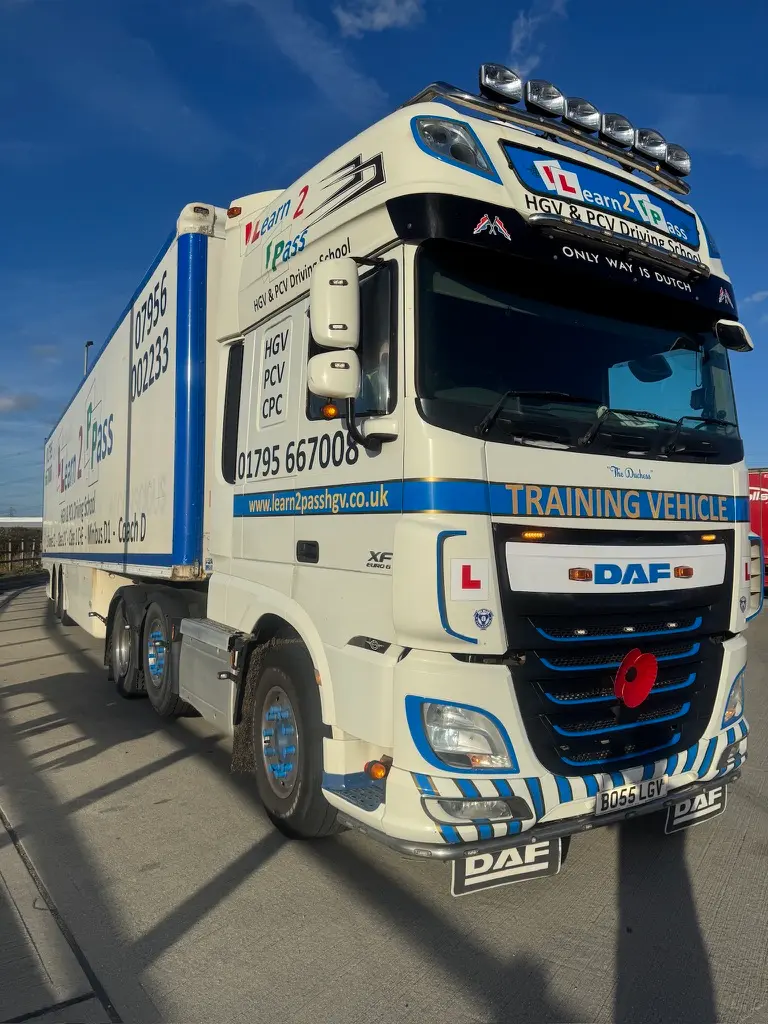
At Learn2Pass, we focus heavily on practical trailer control and building genuine confidence behind the wheel.
Our instructors work with learners step by step so they understand:
- vehicle positioning,
- steering response,
- trailer movement,
- and correction techniques properly.
We train from our Kent base and work with learners progressing through both Category C and Category C+E training routes.
Whether you are completely new to HGV driving or upgrading your existing licence, the goal is always the same: helping you become a safe, confident and employable driver.
Frequently Asked Questions
Can you touch the yellow line during the HGV reverse test?
Yes. The wheels may touch the yellow line, but they must not fully cross over it.
How many shunts are allowed?
You are allowed up to two forward shunts during the manoeuvre.
Is the HGV reverse test difficult?
Most learners find it challenging at first, but once trailer movement and positioning are understood properly, it becomes much easier.
What is the biggest reason people fail?
The most common reasons are oversteering, poor positioning at the start, and running out of space too early in the manoeuvre.
Is reversing harder in real life than in the test?
In many situations, yes. Real yards involve traffic, pressure, weather and tighter spaces. The test is designed to teach the core trailer control skills needed before progressing into real-world driving.
Thinking About Starting HGV Training?
If you are considering starting Category C or Category C+E training and would like advice on the best route for you, feel free to contact Learn2Pass for more information on course options, finance availability and current training dates.